Expert Astrology: Navigating the Cosmos for 2026 Insight
Astrology: Navigating the Cosmos for Personal Insight in 2026
Did you know that over 40% of Americans report believing in astrology? Source: Pew Research Center. In our increasingly complex world of 2026, many are turning to the celestial bodies for guidance, self-understanding, and a sense of connection to something larger than themselves. Astrology, an ancient practice that posits a connection between the movements of planets and stars and events on Earth, offers a unique lens through which to explore human personality, relationships, and life paths. While often debated and sometimes dismissed by mainstream science, its enduring popularity speaks to a deep human need for meaning and a desire to find patterns in the seemingly chaotic universe. This article will delve into the core tenets of astrology, explore its various branches, discuss its relevance in the modern age, and examine the scientific and skeptical viewpoints surrounding it.
The Foundations of Astrological Thought
At its heart, astrology is a symbolic language that interprets the positions and movements of celestial objects to understand human affairs and earthly events. The cornerstone of Western astrology is the birth chart, also known as a natal chart or horoscope. This is a snapshot of the sky at the exact moment and location of an individual's birth. It maps out the positions of the Sun, Moon, planets, and other celestial points within the twelve signs of the zodiac and the twelve houses of the sky.
The Zodiac Signs
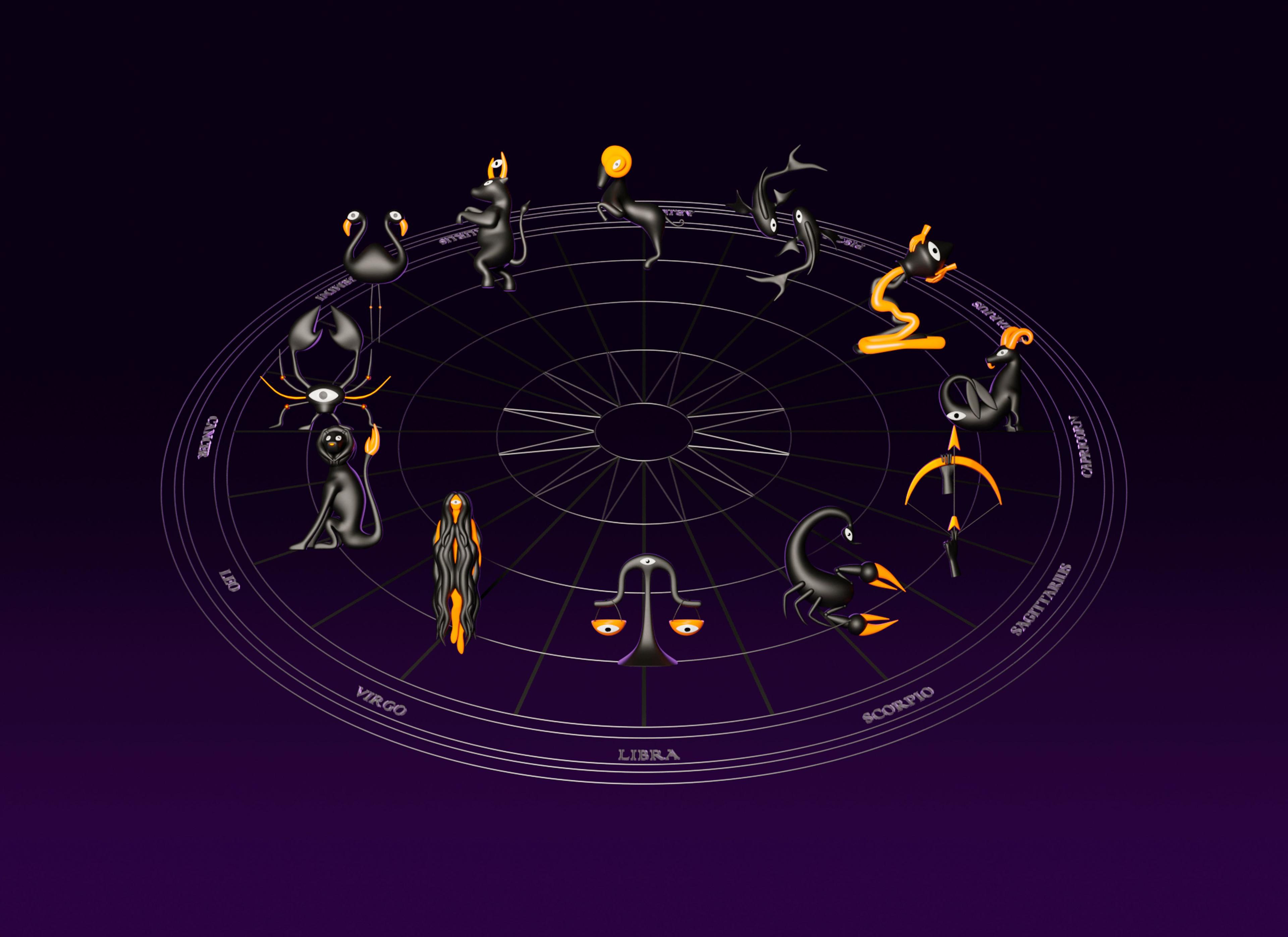
The zodiac is a band of the sky extending approximately 8 degrees north or south of the ecliptic, the apparent path of the Sun across the sky over the course of a year. It is divided into twelve equal segments, each 30 degrees in length, named after the constellations that historically occupied those segments: Aries, Taurus, Gemini, Cancer, Leo, Virgo, Libra, Scorpio, Sagittarius, Capricorn, Aquarius, and Pisces. These signs are not just labels; they represent distinct archetypal energies, qualities, and characteristics.
• Aries (March 21 - April 19): The Ram. Ruled by Mars, Aries is characterized by courage, energy, enthusiasm, and a pioneering spirit. They are often seen as natural leaders, impulsive and quick to act.
• Taurus (April 20 - May 20): The Bull. Ruled by Venus, Taurus embodies stability, sensuality, patience, and determination. They appreciate comfort, beauty, and the finer things in life, often with a grounded and practical approach.
• Gemini (May 21 - June 20): The Twins. Ruled by Mercury, Gemini is known for its adaptability, curiosity, communication skills, and duality. They are intellectual, witty, and enjoy variety, sometimes perceived as restless.
• Cancer (June 21 - July 22): The Crab. Ruled by the Moon, Cancer is associated with emotion, nurturing, intuition, and home. They are deeply connected to family and security, often displaying a sensitive and protective nature.
• Leo (July 23 - August 22): The Lion. Ruled by the Sun, Leo is characterized by confidence, generosity, warmth, and a flair for the dramatic. They enjoy being in the spotlight and inspiring others with their vibrant energy.
• Virgo (August 23 - September 22): The Maiden. Ruled by Mercury, Virgo is practical, analytical, detail-oriented, and service-minded. They strive for perfection and are often skilled in organization and problem-solving.
• Libra (September 23 - October 22): The Scales. Ruled by Venus, Libra seeks balance, harmony, fairness, and partnership. They are diplomatic, charming, and often possess a strong sense of justice.
• Scorpio (October 23 - November 21): The Scorpion. Ruled by Pluto (modern) and Mars (traditional), Scorpio is intense, passionate, resourceful, and mysterious. They are known for their depth, transformative power, and investigative nature.
• Sagittarius (November 22 - December 21): The Archer. Ruled by Jupiter, Sagittarius is optimistic, adventurous, philosophical, and freedom-loving. They possess a strong desire for knowledge and exploration.
• Capricorn (December 22 - January 19): The Goat. Ruled by Saturn, Capricorn is disciplined, ambitious, responsible, and practical. They are focused on achievement and long-term goals, often embodying traditional values.
• Aquarius (January 20 - February 18): The Water Bearer. Ruled by Uranus (modern) and Saturn (traditional), Aquarius is innovative, progressive, independent, and humanitarian. They are often seen as visionaries with a desire for social change.
• Pisces (February 19 - March 20): The Fish. Ruled by Neptune (modern) and Jupiter (traditional), Pisces is compassionate, artistic, intuitive, and empathetic. They possess a deep connection to the spiritual and emotional realms.
The Planets as Archetypes
In astrology, the planets are not viewed simply as celestial bodies but as potent archetypal energies that influence human psychology and experience. Each planet represents a different facet of our inner and outer lives:
• The Sun: Represents the core identity, ego, vitality, and conscious self. It signifies what we strive to become.
• The Moon: Represents emotions, instincts, subconscious, nurturing, and our inner world. It shows how we react and what we need for emotional security.
• Mercury: Governs communication, thought processes, intellect, and learning. It influences how we express ourselves and process information.
• Venus: Represents love, beauty, values, relationships, and pleasure. It shows what we find attractive and how we experience connection.
• Mars: Embodies energy, action, drive, passion, and aggression. It signifies how we assert ourselves and pursue our desires.
• Jupiter: Symbolizes expansion, luck, optimism, wisdom, and growth. It indicates areas of opportunity and abundance.
• Saturn: Represents structure, discipline, responsibility, limitations, and karma. It highlights areas of challenge and where we learn through hard work.
• Uranus: Signifies innovation, rebellion, originality, and sudden change. It points to areas where we seek freedom and break from convention.
• Neptune: Embodies dreams, intuition, spirituality, illusion, and compassion. It relates to our imaginative and mystical inclinations.
• Pluto: Represents transformation, power, subconscious forces, and regeneration. It signifies areas of deep psychological change and intensity.
The Houses: The Stages of Life
The twelve houses of the birth chart represent different areas of life, akin to stages or arenas where the energies of the planets and zodiac signs manifest. They provide context for how these astrological influences play out in practical terms.
1. First House (Ascendant): The self, physical appearance, initial impressions, the way one presents oneself to the world.
2. Second House: Personal finances, possessions, values, self-worth, and resources.
3. Third House: Communication, siblings, short trips, early education, and immediate environment.
4. Fourth House (Imum Coeli): Home, family, roots, private life, and the mother figure.
5. Fifth House: Creativity, romance, children, pleasure, hobbies, and self-expression.
6. Sixth House: Work, daily routines, health, service, and pets.
7. Seventh House (Descendant): Partnerships, marriage, significant relationships, and open enemies.
8. Eighth House: Shared resources, intimacy, death, transformation, and psychological depth.
9. Ninth House: Higher education, philosophy, long-distance travel, spirituality, and foreign cultures.
10. Tenth House (Midheaven): Career, public image, reputation, ambition, and authority figures.
11. Eleventh House: Friendships, groups, hopes, wishes, and social causes.
12. Twelfth House: Subconscious, hidden matters, self-undoing, solitude, spirituality, and karma.
Branches of Astrology
While Western tropical astrology is the most widely practiced in many parts of the world, astrology encompasses a rich diversity of traditions and techniques.
Tropical vs. Sidereal Astrology
The primary distinction lies in how the zodiac is calculated. Tropical astrology, dominant in the West, bases the zodiac on the seasons, with the beginning of Aries coinciding with the spring equinox (around March 20th/21st). This system is fixed and does not account for the precession of the equinoxes.
Sidereal astrology, prevalent in Vedic (Jyotish) and some other Eastern traditions, bases the zodiac on the actual constellations in the sky. Due to the Earth's axial wobble (precession), the sidereal zodiac is currently about 24 degrees behind the tropical zodiac. This difference means that a person's Sun sign, for example, might differ between the two systems.
Vedic Astrology (Jyotish)
Originating in ancient India, Vedic astrology, or Jyotish, is a complex system that uses the sidereal zodiac. It places significant emphasis on planetary periods (dashas) which are believed to govern the timing of events in a person's life. Vedic astrology also uses a system of lunar mansions called Nakshatras, which provide a more detailed layer of interpretation. It is deeply intertwined with Hindu philosophy and cosmology.
Chinese Astrology
Unlike Western astrology, which is solar-birthday based, Chinese astrology is based on a 12-year cycle, with each year represented by an animal sign: Rat, Ox, Tiger, Rabbit, Dragon, Snake, Horse, Goat, Monkey, Rooster, Dog, and Pig. These animal signs are associated with specific personality traits and predictions. The Chinese zodiac also incorporates the five elements (Wood, Fire, Earth, Metal, Water) and the Yin and Yang principles, creating a more complex system known as the Sexagenary cycle.
Horary Astrology
This branch of astrology is used to answer specific questions. A horary astrologer casts a chart for the precise moment a question is asked and understood by the astrologer. The interpretation of this chart is then used to provide an answer to the question. It is considered a highly specialized and precise form of astrological practice.
Electional Astrology
Electional astrology is used to find the most opportune moment to begin an undertaking, such as starting a business, getting married, or launching a project. The astrologer selects a time when the celestial configurations are considered most favorable for the intended purpose.
Astrology in the Modern Era (2026)
In 2026, astrology continues to thrive, adapting to the digital age. Online astrology platforms, apps, and social media influencers have made astrological insights more accessible than ever before. This accessibility, however, also brings challenges, including the proliferation of misinformation and a potential oversimplification of complex astrological principles.
The Rise of "Pop Astrology"
"Pop astrology," often characterized by simplified Sun-sign horoscopes and memes, has become a significant cultural phenomenon. While it can serve as an entry point for many, it often lacks the depth and nuance of traditional astrological practice. Astrologers advocate for a more comprehensive understanding, emphasizing the importance of the full birth chart rather than just the Sun sign.
Astrology as a Tool for Self-Discovery
For many in 2026, astrology serves as a powerful tool for self-awareness and personal growth. By understanding the archetypal energies and patterns in their birth chart, individuals can gain insights into their strengths, challenges, motivations, and relationship dynamics. It can offer a framework for understanding why certain situations arise and how to navigate them more effectively. For instance, understanding a challenging Saturn placement might encourage someone to develop discipline and perseverance in a specific area of their life.
Astrological Counseling
A growing number of individuals are seeking astrological counseling, which integrates astrological insights with psychological principles. Astrologers trained in this approach help clients explore their birth charts to understand personal patterns, overcome obstacles, and identify areas for development. This approach views astrology not as a deterministic system but as a symbolic map that can illuminate potential pathways and foster conscious choice.
The Scientific and Skeptical Perspective
The scientific community generally regards astrology as a pseudoscience. Numerous studies have attempted to find empirical evidence supporting astrological claims, but these have largely failed to demonstrate a statistically significant correlation between astrological predictions and actual outcomes beyond chance.
The Barnum Effect
One of the main reasons for astrology's perceived accuracy is the Barnum Effect (also known as the Forer Effect). This psychological phenomenon describes our tendency to accept vague and general personality descriptions as uniquely applicable to ourselves. Astrological descriptions, particularly those found in popular horoscopes, often contain statements that could apply to a wide range of people, leading individuals to believe they are highly personalized. Learn more about the Barnum Effect on Wikipedia.
Lack of Mechanism and Reproducibility
From a scientific standpoint, a major criticism of astrology is the lack of a plausible physical mechanism that could explain how distant celestial bodies could influence individual human lives in the specific ways astrology claims. Furthermore, astrological predictions often lack reproducibility; different astrologers may interpret the same chart differently, and predictions often fail when subjected to rigorous testing. The American Association for the Advancement of Science has long classified astrology as a pseudoscience.
Cognitive Biases
Skeptics also point to various cognitive biases that contribute to belief in astrology, including confirmation bias (seeking out information that confirms existing beliefs) and selective memory (remembering predictions that came true while forgetting those that did not).
Integrating Astrology with Modern Life
Despite scientific skepticism, astrology's enduring appeal suggests it fulfills a psychological and existential need for many. In 2026, the key lies in approaching astrology with a balanced perspective.
Astrology as a Symbolic Language
Many contemporary practitioners and enthusiasts view astrology not as a literal predictor of fate but as a rich symbolic language. It offers a framework for understanding archetypal energies and psychological patterns. In this view, a birth chart doesn't dictate destiny but rather outlines potentials, challenges, and tendencies that an individual can consciously work with. It's a tool for self-reflection, much like journaling or therapy, but with a unique cosmic perspective.
Critical Engagement with Astrological Information
As with any belief system, critical thinking is essential. It's important to seek out reputable astrologers and resources, distinguish between pop astrology and in-depth analysis, and avoid making life-altering decisions solely based on astrological interpretations. Understanding the limitations and potential biases, such as the Barnum Effect, can help one engage with astrology in a more grounded way.
The Future of Astrology
As humanity continues to explore the cosmos through advanced telescopes and space missions in 2026, our relationship with the stars remains complex. While science seeks objective, verifiable truths, astrology offers a subjective, symbolic, and deeply personal exploration of our place within the universe. Its continued relevance suggests that the human desire for meaning, connection, and self-understanding will persist, regardless of whether those answers are found in the laboratory or in the celestial dance above. The ongoing dialogue between scientific inquiry and personal belief systems like astrology will likely continue to shape how we perceive ourselves and our connection to the vastness of space. For those who find value in its insights, astrology remains a compelling way to navigate the human experience, offering a unique perspective on the journey of life.
Frequently Asked Questions about Astrology
What is a birth chart?
A birth chart, also known as a natal chart, is a personalized astrological map created by calculating the exact positions of the Sun, Moon, planets, and other celestial points at the precise moment and location of a person's birth. It is considered the foundational tool in Western astrology for understanding an individual's personality, potential, and life experiences. The chart is divided into twelve zodiac signs and twelve houses, each representing different areas of life and archetypal energies.
Is astrology scientific?
The scientific community overwhelmingly classifies astrology as a pseudoscience. Numerous studies have failed to find empirical evidence that astrological predictions are accurate beyond chance. Key criticisms include the lack of a plausible physical mechanism, the reliance on vague descriptions that can be attributed to the Barnum Effect, and the failure of astrological predictions to be consistently reproduced under controlled conditions. For instance, the National Science Foundation does not fund research into astrology as a scientific discipline.
How does astrology differ from astronomy?
Astronomy is the scientific study of celestial objects, space, and the physical universe as a whole. It uses observation, experimentation, and mathematical modeling to understand the cosmos. Astrology, on the other hand, is a belief system that interprets the supposed influence of celestial bodies on human affairs and personality. While both fields observe the stars, their methodologies, goals, and underlying principles are fundamentally different. Astronomy is a science; astrology is not.
Can astrology predict the future?
Astrology is generally not considered a predictive science in the way that weather forecasts or economic projections are. While some astrological techniques aim to forecast trends or potential developments, most modern astrologers view it as a symbolic language that describes potentials, tendencies, and psychological patterns rather than fixed destinies. The interpretation of a birth chart is meant to offer insights for conscious navigation of life's challenges and opportunities, rather than a deterministic view of the future.
What is the difference between Sun signs and Moon signs?
Your Sun sign represents your core identity, ego, and conscious self – essentially, the zodiac sign the Sun was in at your birth. It describes your fundamental nature and what you strive to become. Your Moon sign, however, represents your emotional nature, subconscious, instincts, and inner world. It governs how you feel, react emotionally, and what you need for emotional security and comfort. While the Sun sign is what most people refer to when they say "my sign," the Moon sign provides crucial insight into your inner emotional landscape.
How can I learn more about my birth chart?
To learn more about your birth chart, you will need your exact date, time, and place of birth. You can then use this information to generate a free birth chart online through various reputable astrology websites. Many of these sites also offer basic interpretations of the placements in your chart. For a more in-depth understanding, consider consulting with a professional astrologer who can provide a personalized reading and guidance.
Conclusion
Astrology, in its myriad forms, continues to offer a compelling framework for understanding the human condition in 2026. Whether viewed as a symbolic language for self-exploration, a cultural tradition, or a subject of scientific scrutiny, its enduring presence highlights a fundamental human desire to find meaning and connection within the vastness of the cosmos. While scientific evidence does not support its claims of causal influence, the psychological and symbolic insights derived from astrological principles resonate deeply with many. By approaching astrology with a critical yet open mind, individuals can harness its potential as a tool for self-reflection, personal growth, and a deeper appreciation of the intricate dance between the individual and the universe.